

紹介
Sodium hydrosulfide plays a central role in modern industrial chemistry far beyond mining operations. As global industries tighten efficiency and environmental standards, demand continues to expand across leather processing, dye manufacturing, wastewater treatment, and fiber production. In ボインテ, sodium hydrosulfide is positioned as a multi-purpose reagent supporting large-scale industrial systems with a stable supply and controlled quality.
This article builds a multi-industry demand map to explain how sodium hydrosulfide is used across core downstream sectors, and how the sodium hydrosulfide and sodium hydrogen sulfide forms are selected for different process conditions.
How sodium hydrosulfide uses form a multi-industry demand map
Sodium hydrosulfide uses are not concentrated in a single sector. Instead, they form a structured industrial network linking leather, dyes, wastewater, fibers, and agrochemical intermediates. In BOINTE’s global supply system, both liquid and solid grades are widely exported to mining and chemical processing regions, where process stability and compliance are critical .
The material functions as a sulfiding agent, reducing agent, and reaction intermediate. Its chemical behavior makes it adaptable in alkaline environments, especially where controlled sulfur activity is required. This flexibility explains why sodium hydrogen sulfide demand continues to expand across multiple manufacturing chains.
Leather processing: dehairing and controlled tanning efficiency
In the leather industry, sodium hydrosulfide is widely used for raw hide dehairing and tanning preparation. The compound breaks down keratin in hair follicles under alkaline conditions, allowing efficient removal of animal hair without excessive damage to collagen structure.
This controlled reaction is essential for producing high-quality leather with a uniform texture. Liquid sodium hydrosulfide is typically preferred in large tanning lines because it disperses quickly in processing drums and provides stable alkalinity throughout the batch system .
Leather manufacturers prioritize consistency in concentration and low impurity levels to avoid uneven dehairing effects and downstream dyeing defects.
Dye manufacturing: sulfur dye intermediates and color stability
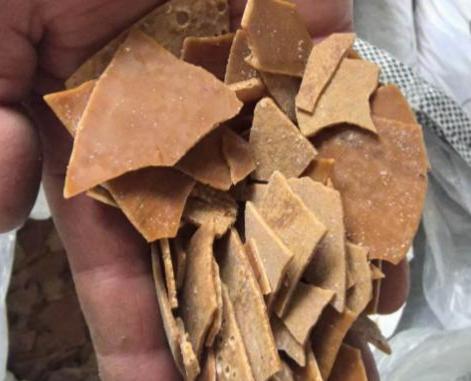
In dye production, sodium hydrosulfide uses are closely linked to sulfur dye synthesis and reduction processes. It acts as a sulfurizing agent and intermediate in the preparation of sulfur-based dyes used in textiles, such as sulfur black and sulfur blue.
It also supports the reduction of aromatic nitro compounds into amine intermediates, which are essential steps in dye molecule formation . This reaction stability directly influences final color strength and fastness performance.
From a supply perspective, 硫酸ナトリウム must maintain controlled reactivity to avoid over-reduction, which can destabilize dye structure. This is why industrial buyers often specify precise grade selection based on reaction temperature and batch size.
Wastewater treatment: heavy metal removal and pollutant control
One of the most important sodium hydrosulfide uses is industrial wastewater purification. It is widely applied for heavy metal precipitation, particularly copper and mercury ions. Through sulfide formation, insoluble compounds such as CuS and HgS are generated, enabling efficient removal from wastewater streams.
This function is critical in mining, electroplating, and chemical manufacturing wastewater systems. It also supports fluoride-containing wastewater treatment processes by integrating with multi-stage purification systems .
BOINTE’s sodium hydrosulfide supply is frequently used in environmental projects where stable dosing and predictable precipitation behavior are required to meet discharge standards.
Artificial fibers and viscose production: desulfurization control
In fiber production, sodium hydrogen sulfide plays a key role in viscose and synthetic fiber processing. It participates in desulfurization reactions during fiber formation, helping to regulate sulfur residue levels and improve fiber uniformity.
It is also involved in sulfite dyeing systems, where controlled chemical reduction ensures better dye penetration and color consistency across synthetic fibers .
For large-scale fiber plants, sodium hydrosulfide in liquid form is often selected due to its ease of integration into continuous production lines and automated dosing systems.
Pesticide intermediates and fine chemical synthesis
Sodium hydrosulfide uses extend into agrochemical production as well. It serves as a sulfurizing agent in pesticide synthesis, including intermediates such as ethanethiol derivatives. It also supports reduction reactions in aromatic compounds, enabling the formation of key chemical intermediates.
This makes sodium hydrosulfide a foundational reagent in fine chemical manufacturing. Process stability and impurity control are particularly important in this sector, as small variations can affect downstream reaction yield and safety compliance.
Product forms and industrial selection logic
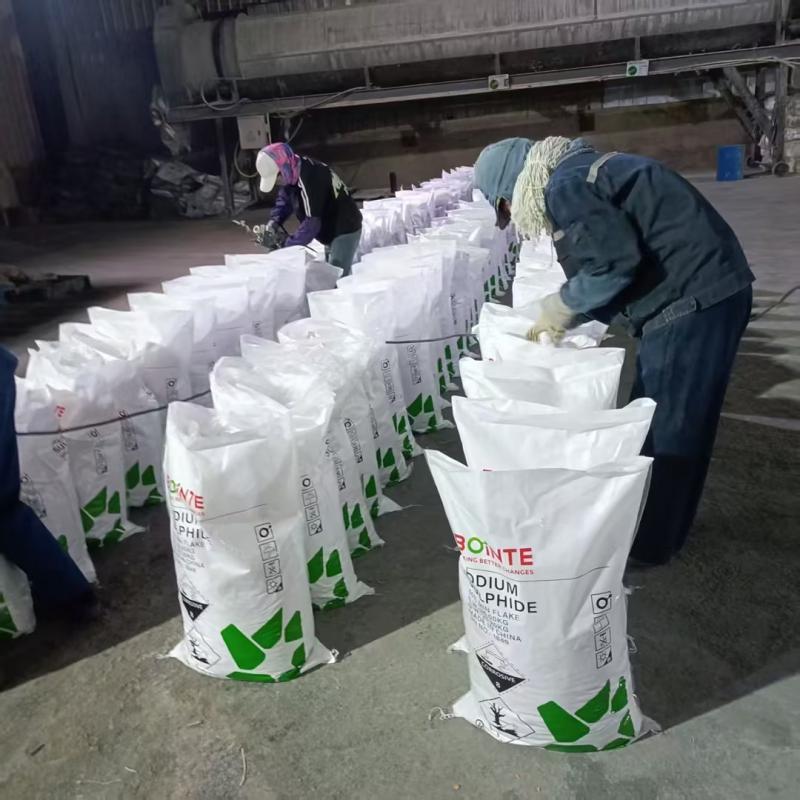
Industrial users typically select between liquid sodium hydrosulfide and solid sodium hydrosulphide based on application scale, logistics, and reaction control requirements.
| Application Area | 優先形式 | Key Function | Process Advantage |
| Leather dehairing | Liquid NaHS | Protein breakdown | Fast dispersion |
| Sulfur dye production | Solid / liquid | Sulfurization agent | Stable reaction control |
| Wastewater treatment | Liquid NaHS | Heavy metal precipitation | Accurate dosing |
| Viscose fiber production | Liquid NaHS | Desulfurization | Continuous integration |
| Pesticide intermediates | Solid NaHS | かがくごうせい | Storage stability |
Sodium sulphide products are also used alongside sodium hydrosulfide in certain industrial systems, particularly in wastewater treatment and metallurgical processing, where overlapping sulfur chemistry improves reaction efficiency .
Operational risks and process control considerations
Across all sodium hydrosulfide uses, process control remains a key factor. Concentration stability, storage conditions, and dosing accuracy directly influence reaction outcomes. In wastewater and dye systems, overdosing may lead to secondary pollution or product instability.
Industrial buyers typically require consistent Fe content control, low insoluble residue, and stable NaHS concentration ranges to maintain predictable performance in automated systems.
結論
Sodium hydrosulfide uses continue to expand across interconnected industrial systems, from leather and dyes to wastewater and fiber manufacturing. Its role as a multifunctional sulfur-based reagent makes it a critical material in modern chemical processing networks.
At ボイントエネルギー株式会社, we focus on supplying stable sodium hydrosulphide and sodium hydrogen sulfide grades designed for global industrial requirements, supporting buyers with consistent quality, scalable supply, and application-oriented solutions for complex production environments.
FAQ: Industrial sodium hydrosulfide applications and sourcing
Is liquid sodium hydrosulfide better than solid form?
Buyers prefer the liquid type for non-stop tasks. These include water cleaning and leather tanning. Meanwhile, they like the solid type for safe storage. It is also better for long truck or ship rides.
How is sodium hydrosulfide used in wastewater treatment systems?
Plants use it to drop heavy metals like copper and mercury. It turns them into solid sulfides. This allows workers to remove them from dirty factory water.
What quality factors are important in industrial procurement?
Main factors include steady NaHS strength. Buyers also look for low iron amounts. They want controlled solid waste and steady reactions under basic conditions.