
Before a fitter opens a sodium sulfide dosing line, several questions need answers. Where is liquid trapped? What else connects to the line? Could acid reach the residue? This article follows those questions from reagent addition to work release, with particular attention to hydrogen sulfide (H₂S).
Where flotation performance and safe handling meet
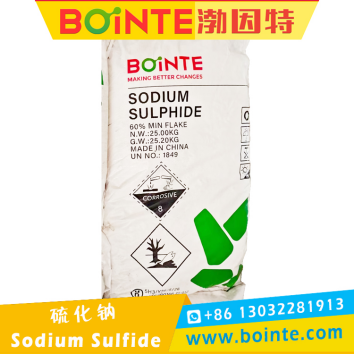
In oxide copper flotation, sodium sulfide is added for surface treatment before collection. Its useful rate belongs to the ore and reagent scheme being tested. Keep the mineralogical context with the test result: a setting established for one blend is evidence for that blend, not a standing recommendation for every feed.
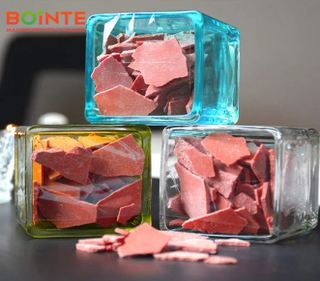
The same qualification applies when comparing sodium sulphide yellow flake with another supplied form. A fair comparison needs the same active-reagent basis and comparable ore, water and conditioning conditions. Color does not supply those missing test conditions. An uncontrolled plant comparison can confuse a feed change with a reagent effect.
What to check before increasing the dose
A recovery drop can send attention straight to the pump setting. Check delivery first: measured flow, solution strength and calibration. In case the line is limited, making the adjustment in the display might fail to create the desired addition. It is important to document the tests along with the outcome of the recovery test for the next shift to differentiate between a delivery problem and the reagent requirement adjustment.
Has the ore blend changed? Is the plant drawing a different proportion of recycled water? Are pH, mixing and conditioning time within the conditions used to establish the reagent scheme? Record these alongside collector addition and the metallurgical response.
Agree on the test comparison before changing the rate. Include concentrate grade and selectivity alongside copper recovery, and decide how representative samples will be collected. Keep other variables steady where practical. Otherwise, the result may show that the circuit changed without showing which change helped.
The calculation basis also matters. Check the units in the shift record. A solution flow per hour and a dry-reagent addition per tonne describe different quantities. Concentration and ore throughput are needed to relate them. Keep those values with the result.
Acid contact changes the exposure risk
The ILO/WHO safety card for sodium sulfide calls for separation from acids and oxidants. Acid contact is relevant to H₂S generation. During the site review, trace acid-cleaning connections, transfer destinations and any shared equipment carrying acidic streams. These illustrative scenarios need checking against the actual piping. Measuring the bulk tank alone will not settle what is present in a connected drain or isolated section.
NIOSH gives a particularly relevant warning about H₂S: the sense of smell becomes rapidly fatigued. The lack of the smell of rotten eggs should not therefore be considered as an indication that it is safe. Methane gas is flammable in nature. Access is guided by the readings from the instruments and the emergency plan for the site.
The SDS accompanying sodium sulphide red flake belongs with the operating documentation. Match it to the material received. Product form and composition should be considered when understanding the handling instructions, and the site evaluation must nevertheless consider the real storage tank, transfer, and ventilation system.
Dosing-area controls that operators can verify
Temporary work can change chemical segregation. Consider an acid-cleaning hose brought to a sulfide tank during a shutdown: the usual operating arrangement no longer describes every possible connection. The job review needs to account for that hose, its contents and its destination. Tank labels and connection identification support segregation, but the temporary work must be covered too.
Detector coverage needs to follow the job location. For example, a fixed monitor near the entrance may leave an unanswered question about a pit beside the tank. Request the capable assessor to define the location of the sampling, ventilation, and response plan in case of equipment failure for the job.
Before a batch or transfer, operators should check the following:
– Correct receiving tank, transfer connection and available capacity.
– Condition of hoses, pump seals, valves and accessible pipework.
– Availability of required ventilation and gas monitoring.
– Access to eyewash, emergency shower and the specified protective equipment.
– A clear route out of the area if an alarm or leak occurs.
An alarm changes the task from routine handling to emergency response. Withdraw as the site plan requires and prevent others from approaching. Any source isolation needs an approved safe method; a worker should not approach a leaking skid merely to close its valve. Rescue also belongs to the prepared emergency response.
Opening equipment needs a maintenance assessment
There should be a work release covering the contents left behind prior to line opening. Trace all areas that could trap the material in addition to any connections capable of admitting fluid or pressure. The process of isolation and preparation has to include the above, and its success has to be checked before work release. Pass along isolation status and any other potential hazards left behind to the maintenance worker upon handover; the stop pump instruction is just one such hazard.
Entry to the tank will bring new hazards not covered by the line opening permit. Determine first if the confined space criteria apply to your task before assigning the task. If a permit required entry is required, the entry system will include the following: atmospheric testing, isolation, ventilation, attendant and rescue. Choose respirators through the site program. The completion of flushing and hatch opening does not indicate proper entry conditions.
A good sample needs a known location and time. In addition, there needs to be an approved means of obtaining that sample without reaching into the tank. Assess any sampling method requiring such activity. Make sure that the location and operating conditions are sent to the lab with the
A usable operating window includes exposure controls
A change to the addition point should prompt two reviews: what it does to conditioning, and what it does to access, cleaning and isolation. Keep the resulting decisions together in the operating documentation. That gives metallurgists and maintenance staff a common account of the circuit they are managing.
When reviewing Industrial Reagents for Flotation, carry the plant’s tested reagent requirements into the supply discussion. ボインテ can provide product information for that discussion; plant-specific dosing and work procedures remain decisions for the site’s qualified teams.
よくある質問
What dosage should a new ore blend use?
Use representative testwork to establish a starting window. Transfer an existing setting only after checking that mineralogy, water conditions and the reagent scheme justify it.
Does a higher sodium sulfide addition always improve recovery?
No. Insufficient and excessive sulfidization can both impair flotation. Investigate delivery and conditioning conditions before treating poor recovery as evidence of insufficient reagent.
Can pH readings replace H₂S detectors?
No. A pH measurement describes the sampled liquid at that location and time. It does not measure the gas concentration in a worker’s breathing zone.
What should happen if the H₂S smell disappears?
Do not use that change to re-enter. Remain outside the affected area until authorized personnel verify conditions and release it under the emergency procedure.
Can maintenance begin once the dosing line is flushed?
Flushing is one possible preparation step. Work release still depends on verified isolation, residual-hazard assessment and the applicable permit, including confined-space controls where required.