Leather and mineral-processing plants can both buy sodium sulfide, yet their purchase specifications may prioritize different risks. The useful comparison is not a simple “high grade versus low grade” label. It is the link between process sensitivity, iron and insolubles, product form, documentation, and the way the receiving team releases each lot.
The application changes what counts as a good grade
A leather processor often evaluates how consistently the chemical supports raw-hide dehairing and related treatment steps. A mineral-processing plant may focus on reaction performance, dosage stability, and the economics of continuous use. Both buyers need assay and traceability, but the weight assigned to each field can differ.
Leather-grade priorities
Stable reaction behavior across hides and production lots.
Iron control when color or downstream appearance is sensitive.
Low and consistent insolubles for make-up and handling.
Packaging and documents that support clean warehouse release.
Mineral-processing priorities
Reliable sulfide availability at the target dosage.
A grade that fits flotation chemistry and water quality.
Delivered cost measured against active Na2S, not only gross weight.
Supply continuity for a plant that cannot easily change reagent.
The specification fields that deserve a side by side review
The most useful buying discussion begins with shared fields and then adds application-specific controls. The shared core usually includes product identity, Na2S minimum, carbonate, water insolubles, iron, packaging, lot traceability, and transport documents. The application-specific layer defines which limits are truly decisive.
|
Specification area |
Leather processing |
Mineral processing |
|---|---|---|
|
Na2S assay |
Supports repeatable treatment strength. |
Supports dosage and reagent balance. |
|
Iron limit |
May matter for color and process consistency. |
May matter when impurities affect downstream chemistry. |
|
Insolubles |
Important for clean make-up and handling. |
Important for dosing, mixing, and plant housekeeping. |
|
Form and packing |
Must fit bags, storage, and manual or automated make-up. |
Must fit bulk movement and reagent preparation. |
|
Acceptance evidence |
COA, lot identity, appearance, and agreed test. |
COA, lot identity, process trial, and dosage confirmation. |
BOINTE’s 60% sodium sulfide pages show how a commercial grade can be described with Na2S, carbonate, water insolubles, iron, CAS 1313-82-2, and bag sizes. That framework is useful for both industries, but the final limits should be agreed against the buyer’s process rather than copied from a neighboring application.
The receiving procedure should also reflect how the chemical is introduced to the process. A leather plant may need a repeatable make-up sequence and clear visual control, while a mineral plant may need bulk transfer, dissolution, and dosage checks. Writing those expectations into the purchase specification reduces the chance that a generic grade label will be treated as a complete technical requirement.
Why iron and color can change the conversation
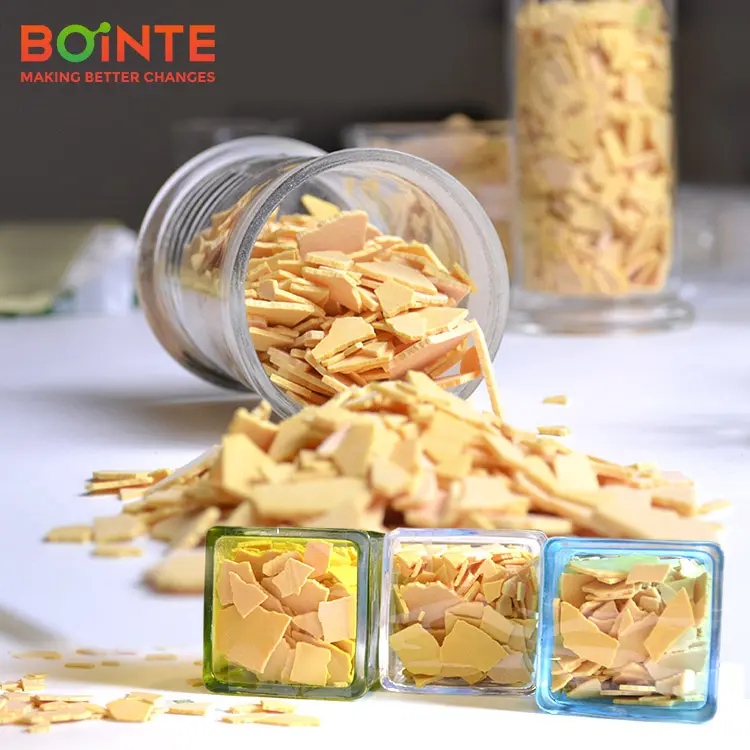
Iron is more than a visual issue when the application is sensitive to contamination or appearance. BOINTE lists different iron bands for 60% yellow flakes, including 0.001% maximum, 0.003% maximum, and 0.008%-0.015% maximum ranges. A leather buyer may treat that difference as central, while a mineral plant may weigh it against flotation performance and cost.
A leather buyer’s question
A buyer looking at leather grade sodium sulfide supply should ask whether the proposed Fe limit is connected to the desired process outcome and whether the same limit appears in the quotation, COA, and shipment documents. The product name alone does not define the grade.
A mineral buyer’s question
A mineral buyer comparing mineral processing sodium sulfide specifications should ask how the grade will be evaluated in the actual reagent circuit. The practical test may include dissolution, dosage response, and process stability rather than appearance alone.
What should stay common across both specifications
A split specification does not mean the two products need unrelated paperwork. Core identity and compliance controls should remain aligned so that procurement, warehouse, quality, and logistics teams can trace the same material through the order cycle.
At minimum, the two specifications should agree on the following points:
Correct chemical name, CAS number, and solid form.
Declared Na2S basis and minimum percentage.
Iron, carbonate, and water-insoluble limits.
Packaging, lot marking, current SDS, and transport documents.
The application-specific section can then add the acceptance test, retained-sample requirement, visual reference, or process trial that matters to that buyer. A product category such as sodium sulfide specifications for leather is a useful starting point, but the signed purchase specification should control the shipment.
Commercial terms should follow the same distinction. Compare net active content, packaging, freight, unloading, storage, and the cost of any additional testing. A lower unit price is not necessarily the lower operating cost when a plant must change its dosing equipment, accept more insolubles, or manage a less consistent incoming material.
The practical takeaway for grade selection
Leather-grade and mineral-processing sodium sulfide should share a traceable chemical identity while allowing different limits and acceptance evidence. The right specification is the one that translates the plant’s actual risk into measurable fields, not the one with the most impressive label.
Share your application, target assay, iron limit, packing preference, and receiving method with BOINTE through contact us so the comparison can be tied to a workable commercial specification.
FAQ (questions fréquentes)
Is leather-grade sodium sulfide always purer than mineral-processing grade?
Not automatically. “Grade” should refer to a defined specification for an application. A buyer should compare assay and impurity limits instead of relying on the label alone.
Why might a leather buyer request a lower iron limit?
Iron can matter when process consistency, color, or downstream appearance is sensitive. The exact limit should be linked to the buyer’s process and acceptance evidence.
Can one COA format serve both industries?
The core fields can be shared, but each industry may need different acceptance notes, sampling requirements, or process-specific checks.
Do red and yellow flakes define leather and mineral grades?
No. Color can be a useful visual clue, but it does not replace assay, iron, carbonate, insolubles, or application-specific testing.
What should be fixed before a purchase order is issued?
Fix the chemical identity, assay basis, impurity limits, packing, lot documents, acceptance method, and any visual or process reference.